A FINE, MID-18TH CENTURY, ELM CRICKET TABLE WITH GALLERIED UNDER-TIER, IN ORIGINAL CONDITION
11946
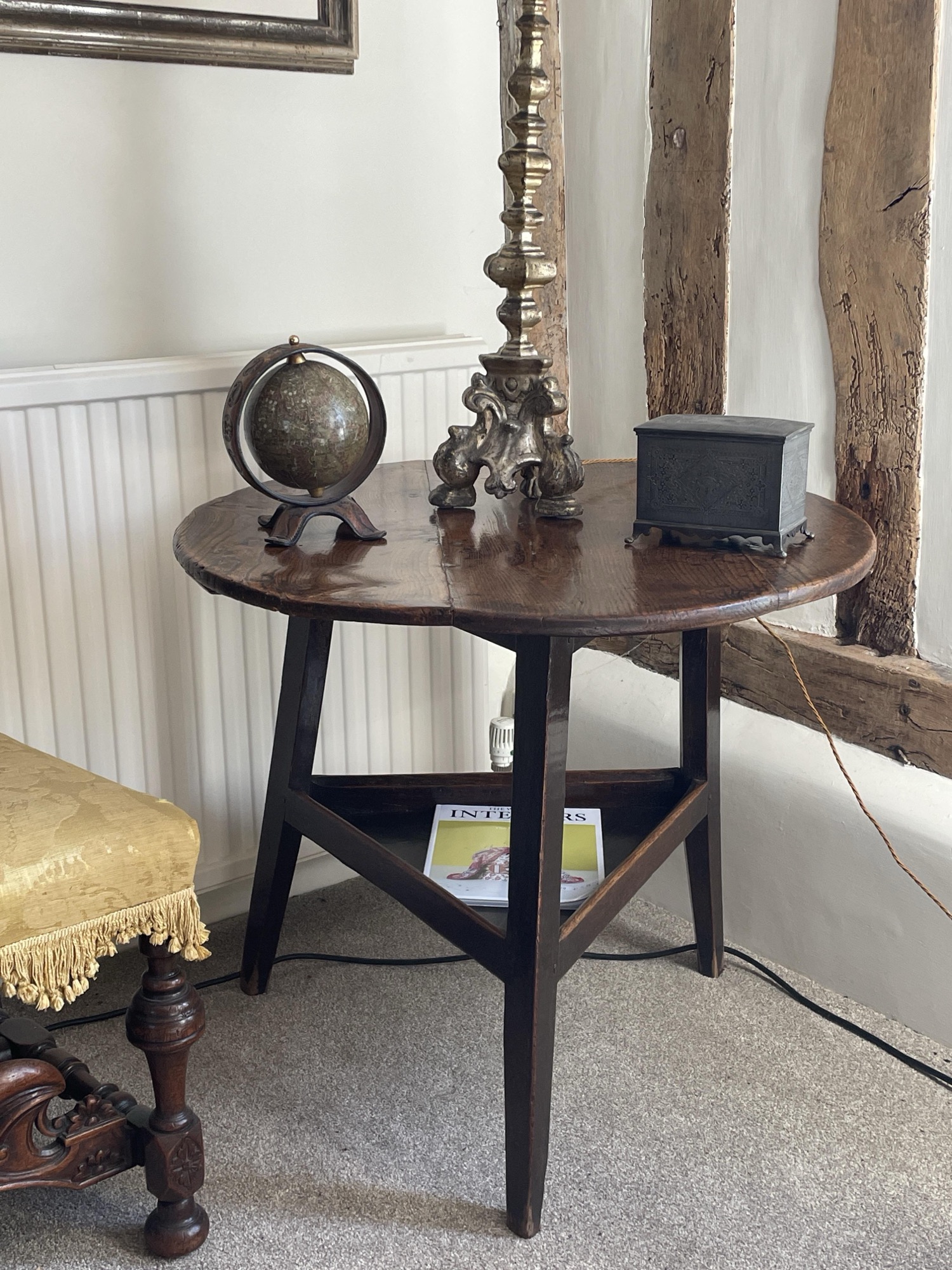
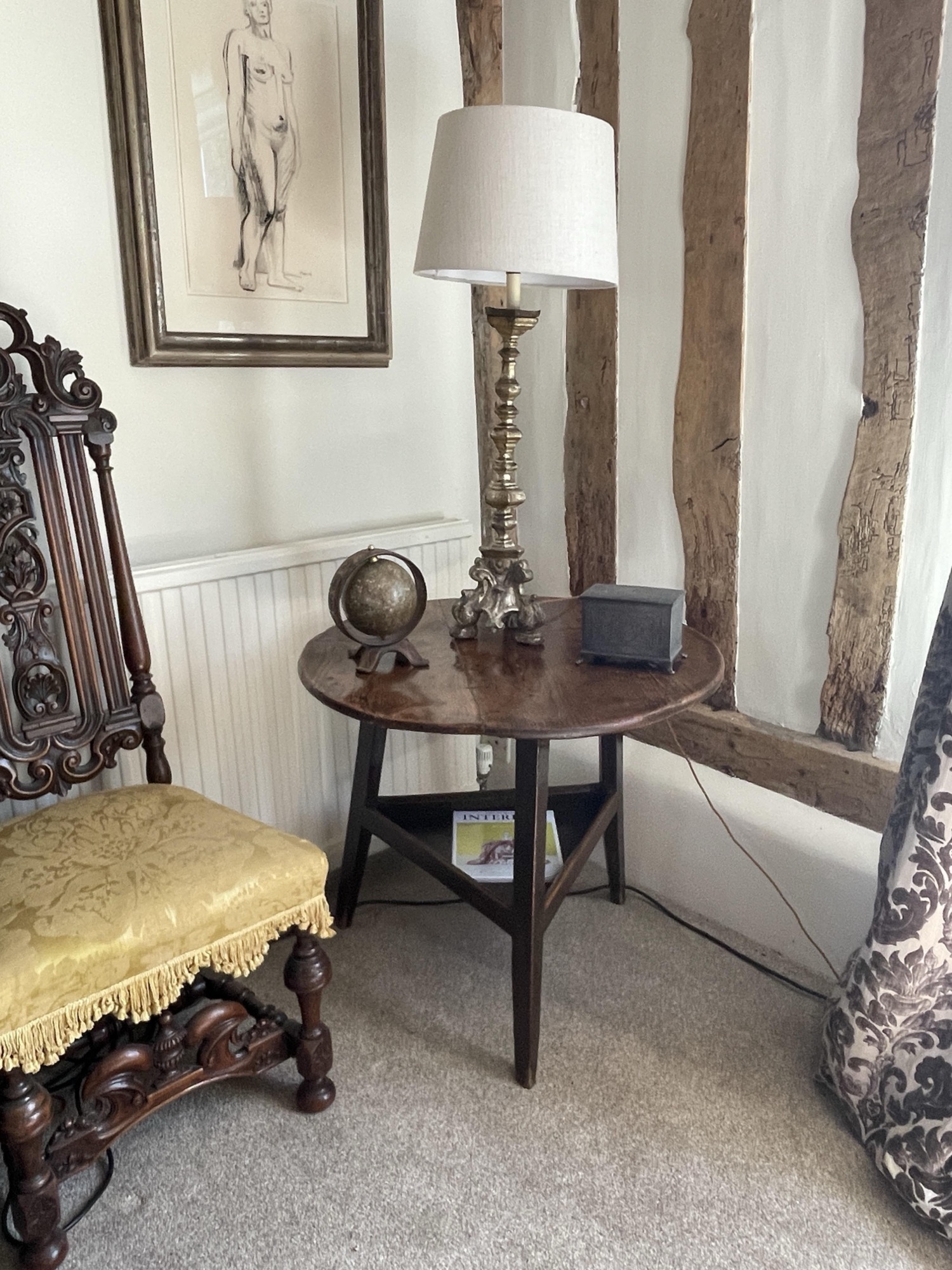
This is as good an example of its type as you will find. The classic English vernacular, cricket table in untouched, original condition, with the deep colour and rich patina that only an unrestored surface carries.
Cricket tables were made from different woods, in different qualities and generically in relatively large numbers for taverns, farmhouses and vernacular homes, where their three splayed legs stood firm on flag and uneven floors; but because they were everyday furniture, hard-used and moved constantly about the house, very few survive in this condition, and original examples are now keenly sought.
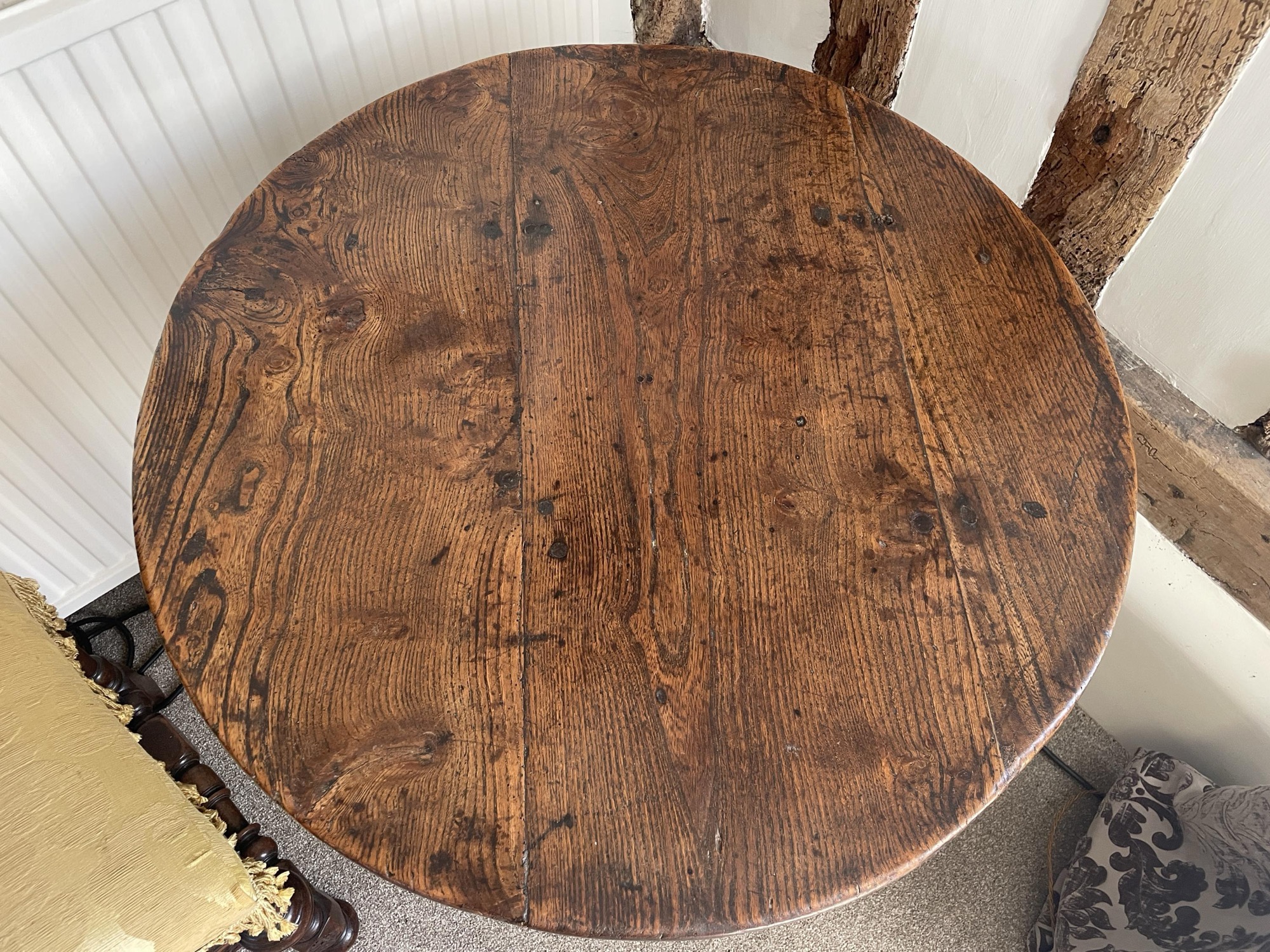
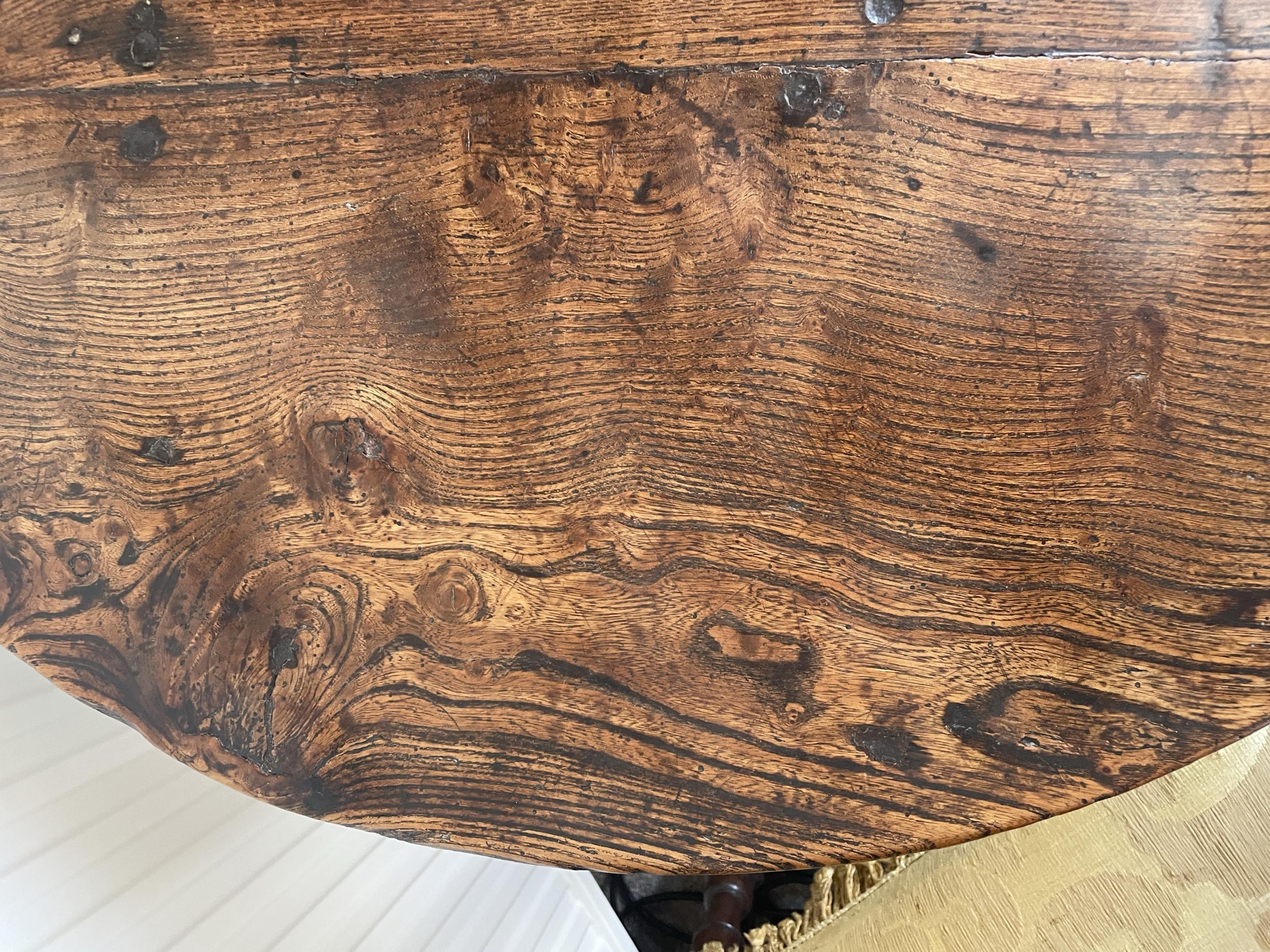
The circular top is of richly figured elm, the planks clearly selected to display the wild, swirling graining for which elm has always been prized: the top was intended as part of the decorative effect of the piece, a display surface as much as a working one, and time has mellowed it to a glowing honey-brown.
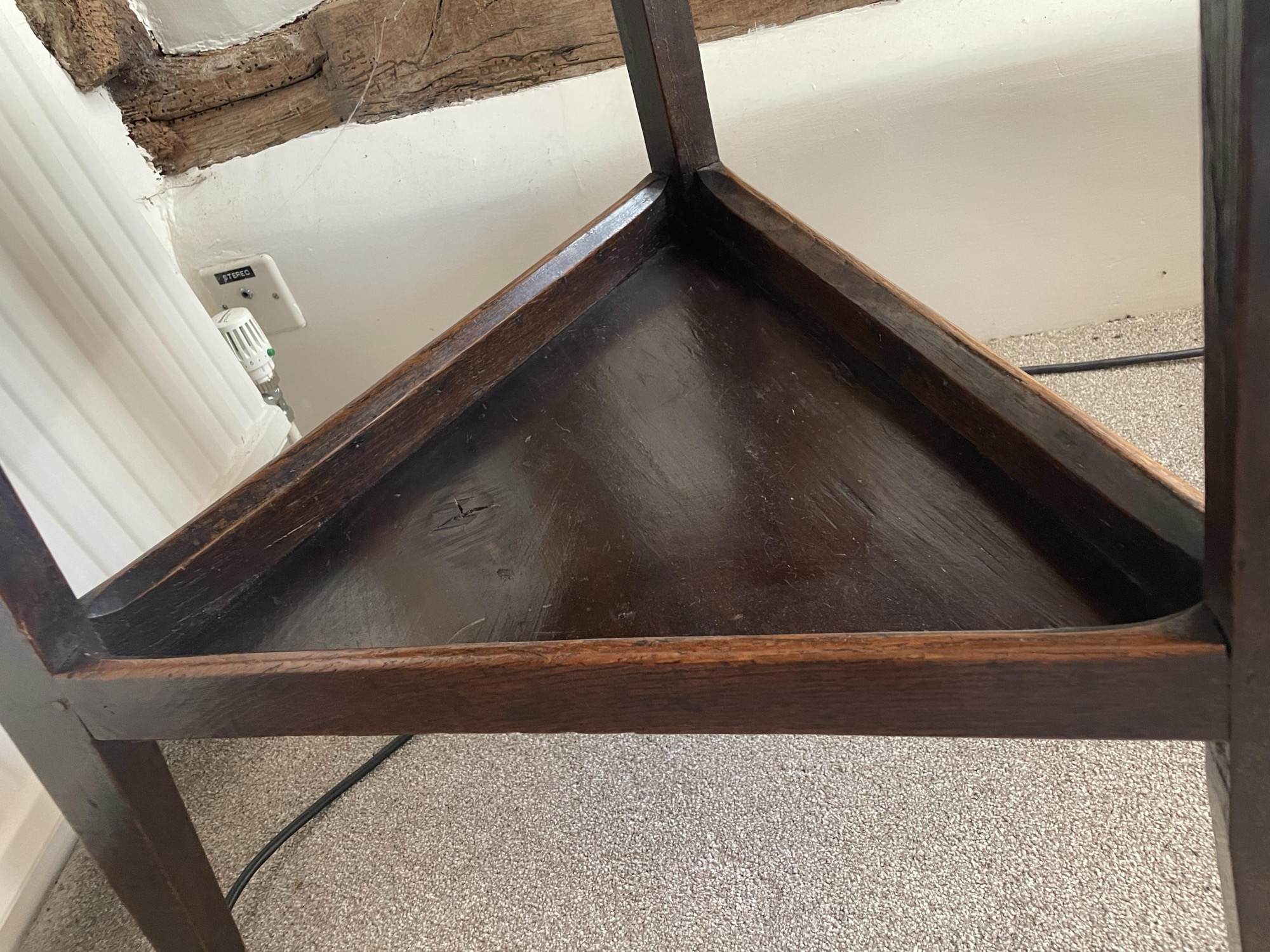
Unusually, it is fitted with a triangular under-tier with raised gallery, a practical shelf (in the tavern, for the tankards) that adds rarity and presence, uniting the three chamfered legs.
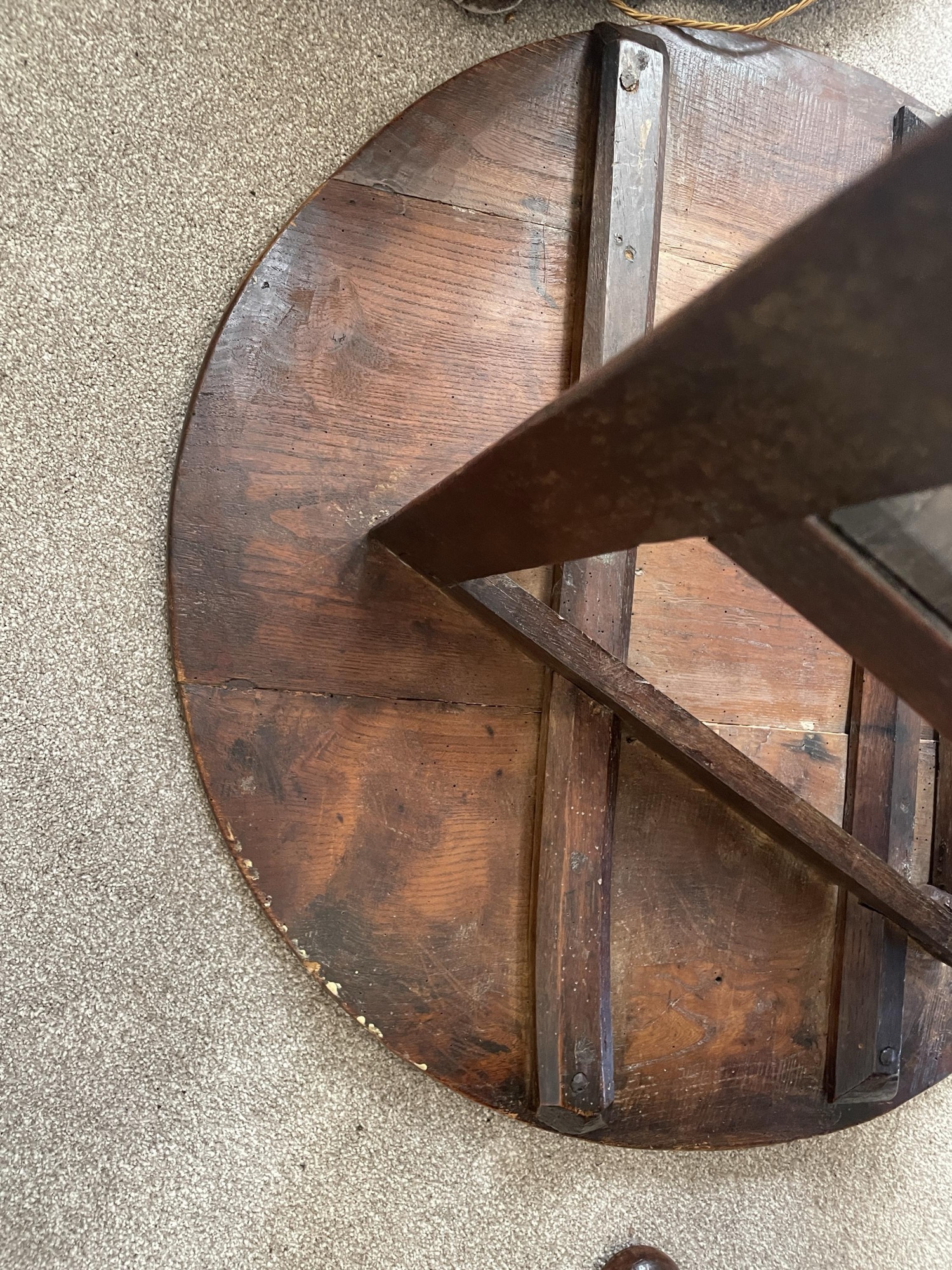
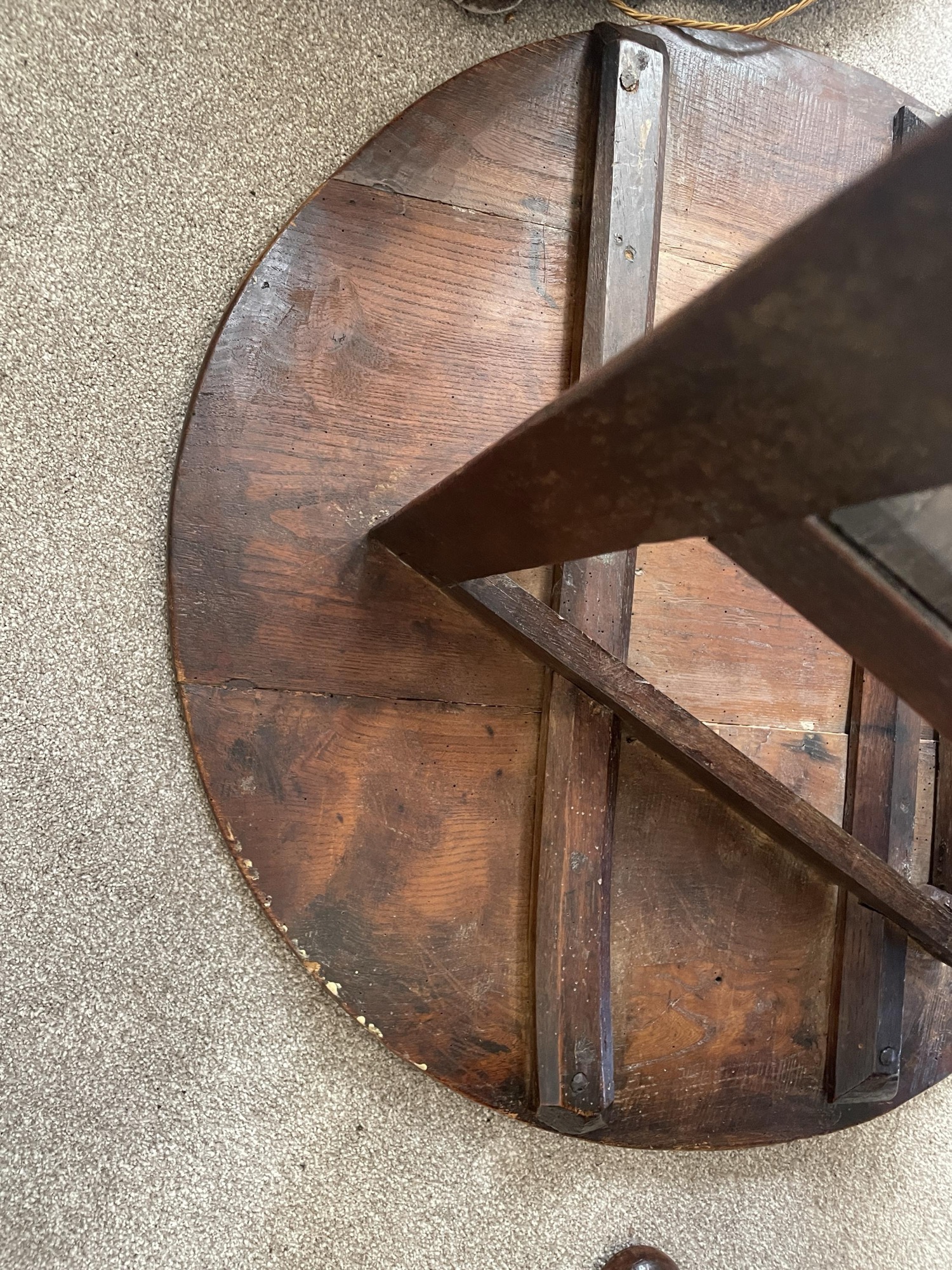
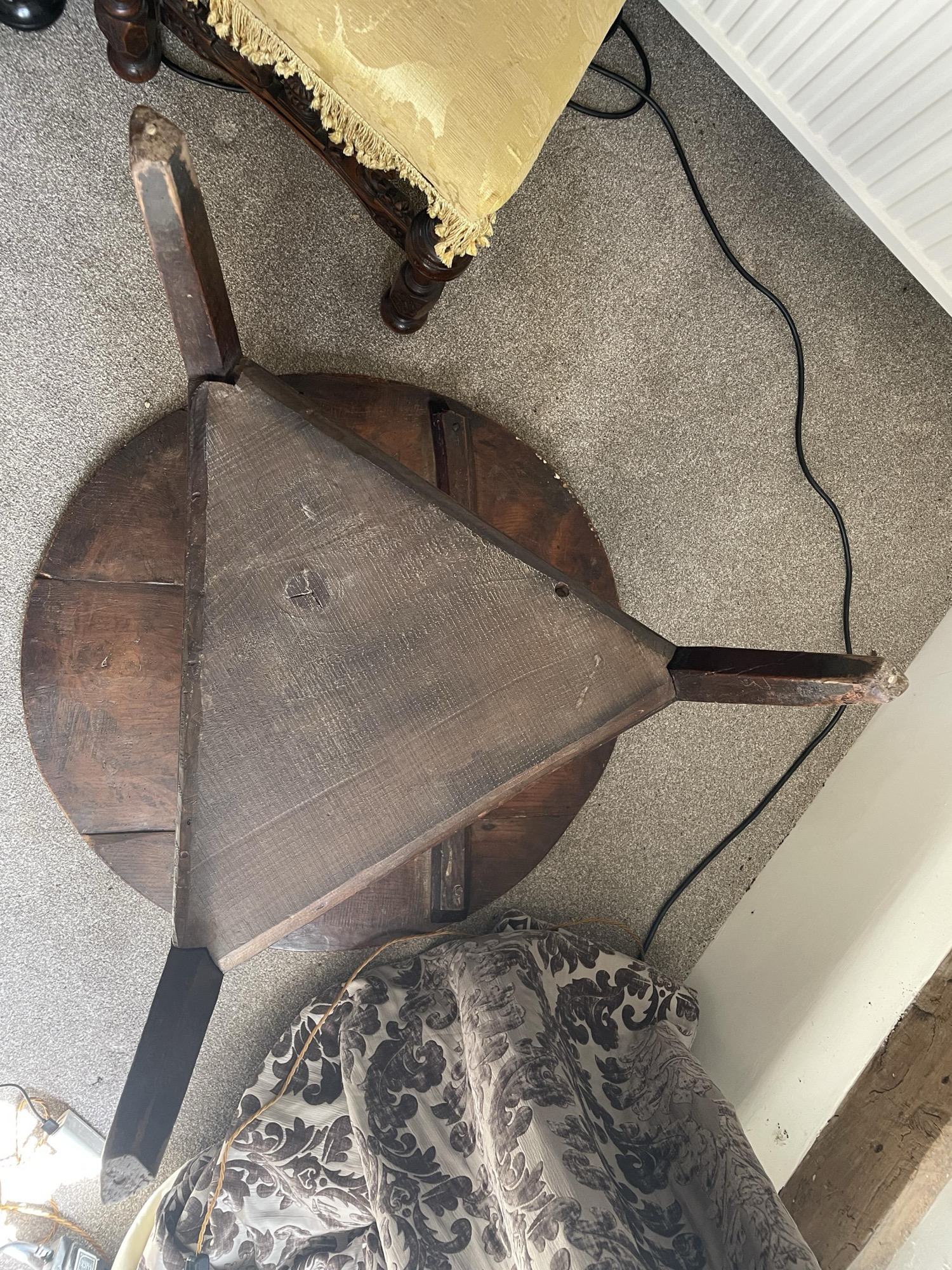
The underside entirely undisturbed, the top with its original cleats; original surface throughout.
Simple, sculptural and endlessly useful, cricket tables are among the most versatile of all early furniture, as much at home in a contemporary interior as in a period one, as a lamp, side, wine or bedside table.
English, mid-18th century, circa 1740-70.
Diameter 82cm, 32", Height 71cm, 28", top depth 1.5cm, 0.6"
The cricket table, a round top on three splayed, stick legs, has been a cornerstone of English vernacular furnishing since the early 16th century, made in the durable native hardwoods: oak, elm, ash and sycamore and softwoods such as pine also.
The name derives from the old Dutch krick(e) and the old French criquet, both meaning a stick: this was, in origin, the "stick table", named for the plain stick legs on which it stands. The association with the game of cricket is probably a nineteenth-century derision, matching the table's three legs to the three stumps of the wicket, and it cannot be original in any case, for cricket was played with a two-stump wicket until the third stump was introduced in the 1770s.
(The krick/criquet "stick" derivation is, fittingly, also the favoured etymology for the name of the game itself.) The form's popularity and longevity comes from the tripod itself: three legs sit firm on the flagstones and uneven floors of period houses and inns, where four legs rock. They served in taverns, the under-tier holding tankards while the top took the meal or the cards, and in farmhouses and cottages as the everyday table, moved constantly about the house and used hard. That is why, although made in large numbers through the 17th and 18th centuries, honest survivors in original condition are now scarce as they were heavily used.


 that adds rarity and presence, uniting the three chamfered legs.The underside entirely undisturbed, the top with its original cleats; original surface throughout.Simple, sculptural and endlessly useful, cricket tables are among the most versatile of all early furniture, as much at home in a contemporary interior as in a period one, as a lamp, side, wine or bedside table. English, mid-18th century, circa 1740-70.Diameter 82cm, 32", Height 71cm, 28", top depth 1.5cm, 0.6"The cricket table, a round top on three splayed, stick legs, has been a cornerstone of English vernacular furnishing since the early 16th century, made in the durable native hardwoods: oak, elm, ash and sycamore and softwoods such as pine also. The name derives from the old Dutch krick(e) and the old French criquet, both meaning a stick: this was, in origin, the "stick table", named for the plain stick legs on which it stands. The association with the game of cricket is probably a nineteenth-century derision, matching the table's three legs to the three stumps of the wicket, and it cannot be original in any case, for cricket was played with a two-stump wicket until the third stump was introduced in the 1770s.(The krick/criquet "stick" derivation is, fittingly, also the favoured etymology for the name of the game itself.) The form's popularity and longevity comes from the tripod itself: three legs sit firm on the flagstones and uneven floors of period houses and inns, where four legs rock. They served in taverns, the under-tier holding tankards while the top took the meal or the cards, and in farmhouses and cottages as the everyday table, moved constantly about the house and used hard. That is why, although made in large numbers through the 17th and 18th centuries, honest survivors in original condition are now scarce as they were heavily used.)